
Antique American Clocks: An Expert Guide
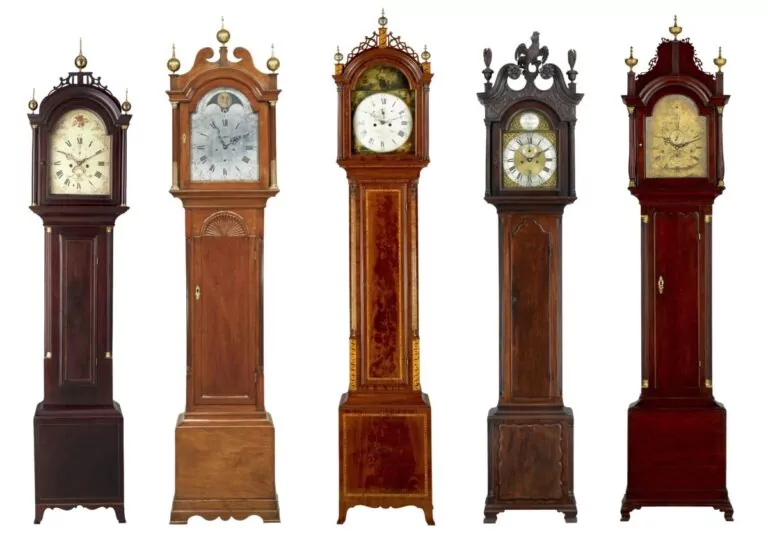
Like all antique clocks, American clockmakers stand at the crossroads of artistry and scientific engineering of their time, however they also capture the story of a young nation refining its own voice in a field long dominated by European design. While early American clocks drew from established European forms, local makers gradually infused them with distinctly American sensibilities, simplifying construction, experimenting with new materials, and ultimately revolutionising mass production. From the handcrafted tallcase clocks of the 18th century to the precision regulators and the widely available ornate mantel pieces of the late 19th century, American clockmakers added their own distinct influence to the history of world horology. This guide explores the origins of American clockmaking, the evolution of movements and case styles, influential makers and factories, manufacturing innovations, practical care, and the current market.
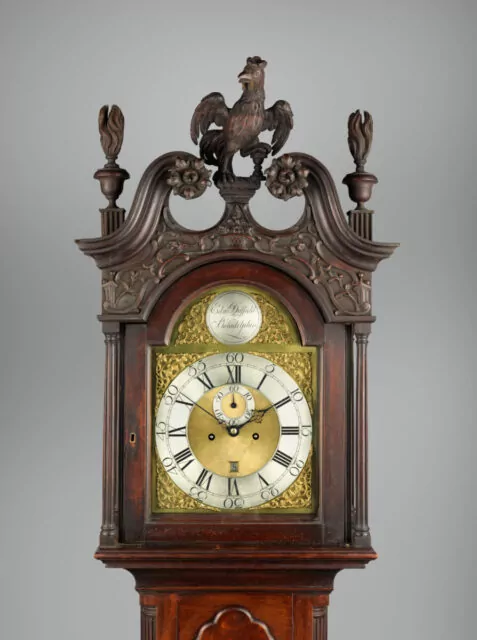
Circa 1765-75.
Photo credit: The Metropolitan Museum of Art.
Origins – Early American Clockmaking
Clockmaking in the United States began in the 18th century, largely in small workshops serving wealthy households. Many early makers were American born but trained in European techniques, while a few, such as Thomas Harland (1735-1807), were immigrants who brought their horological expertise directly from England, introducing it to the Connecticut River Valley. These artisans adapted the skills they had learned abroad to the materials and tastes of the young American market, laying the foundation for a distinctly American style.
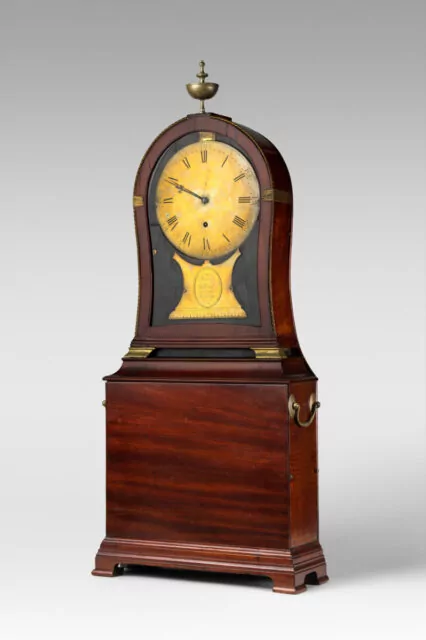
Photo credit: The Metropolitan Museum of Art.
Lemuel Curtis (1790-1857) produced banjo clocks, a popular, distinctly American design, of the early 19th century. However, it was Massachusettsan brothers Aaron (1757-1844) and Simon Willard (1753-1848) that first patented the design in 1802. These narrow waisted wall clocks, often adorned with painted glass panels, became quintessentially American. Similarly, David Wood (1766-1850), also Massachusetts born, produced tallcase and shelf clocks with finely painted dials and brass movements, reflecting European influenced techniques applied in America.
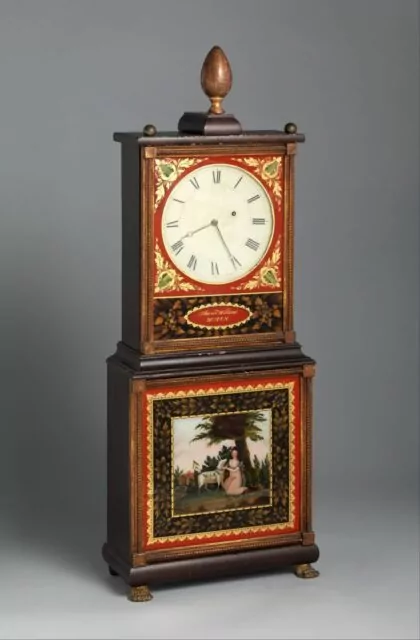
Photo credit: The Metropolitan Museum of Art.
Among these makers, Thomas Harland stands out as one of the few who was not born in America, bringing his knowledge and training directly from England to Norwich, Connecticut, producing tallcase clocks that were both technically precise and but aesthetically aligned with European tastes. While Eli Terry (1772-1852), born in Connecticut, bridged early artisanal tradition with industrial innovation. He built on the knowledge introduced by European trained makers and would go on to pioneer the mass production of wooden movement clocks with interchangeable parts, ultimately revolutionizing American clockmaking and industrialization.
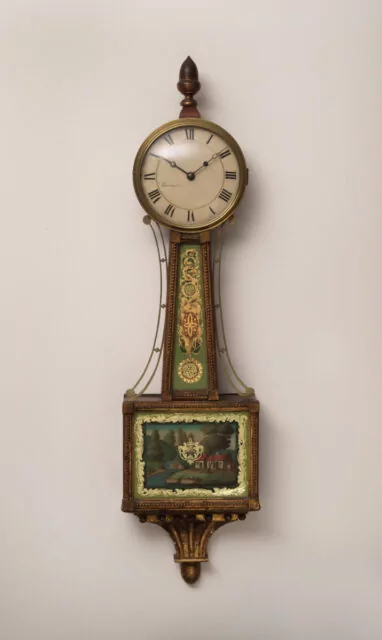
Photo credit: The Metropolitan Museum of Art.
Movements and Mechanics
Much like their European counterparts the earliest American clock movements were crafted from brass and steel, and were weight driven. While, as mentioned above, some early 19th century clocks had wooden movements, which were fragile but historically significant. Weight driven movements were common in tallcases and regulators, while later shelf and mantel clocks generally used spring driven mechanisms. Many clocks featured hour striking trains, normally on a bell or gong, as well as alarums and calendar works. Later innovations introduced electric or self-winding movements in the early 20th century.
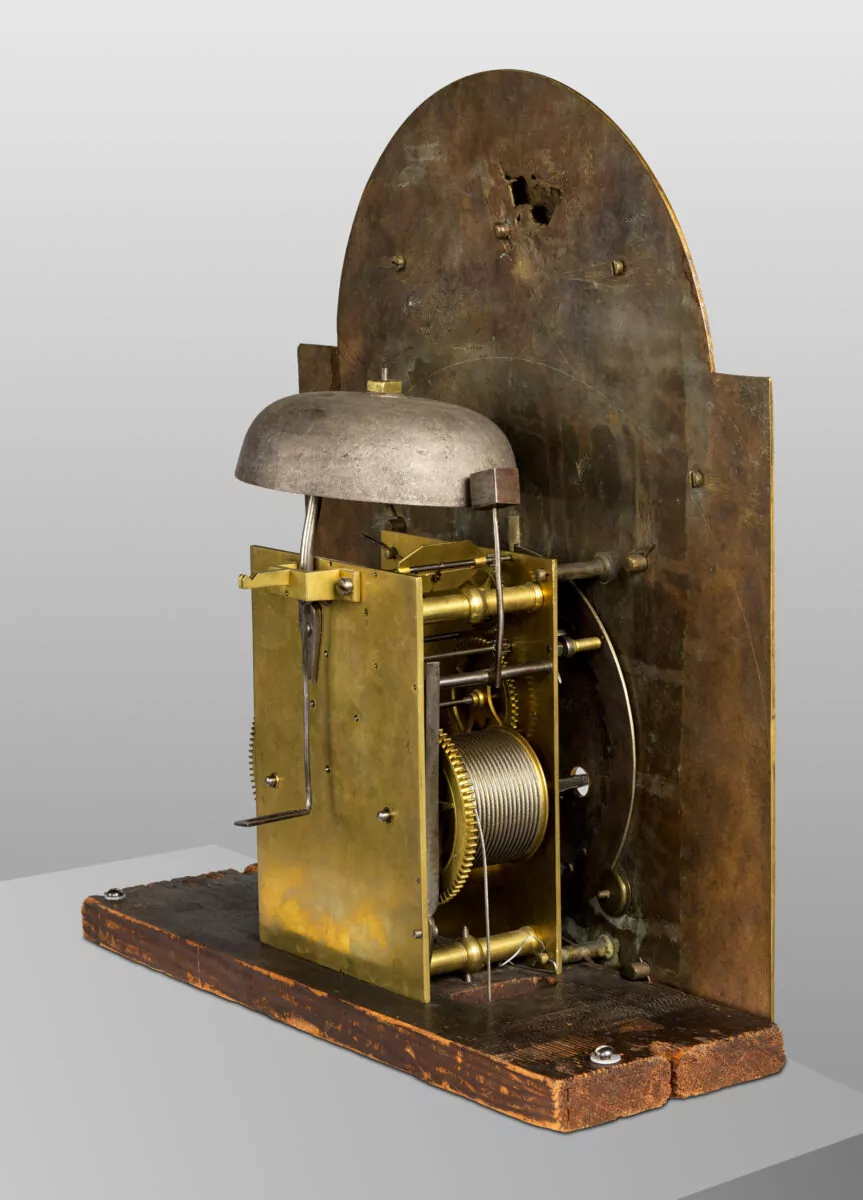
Photo credit: The Metropolitan Museum of Art.
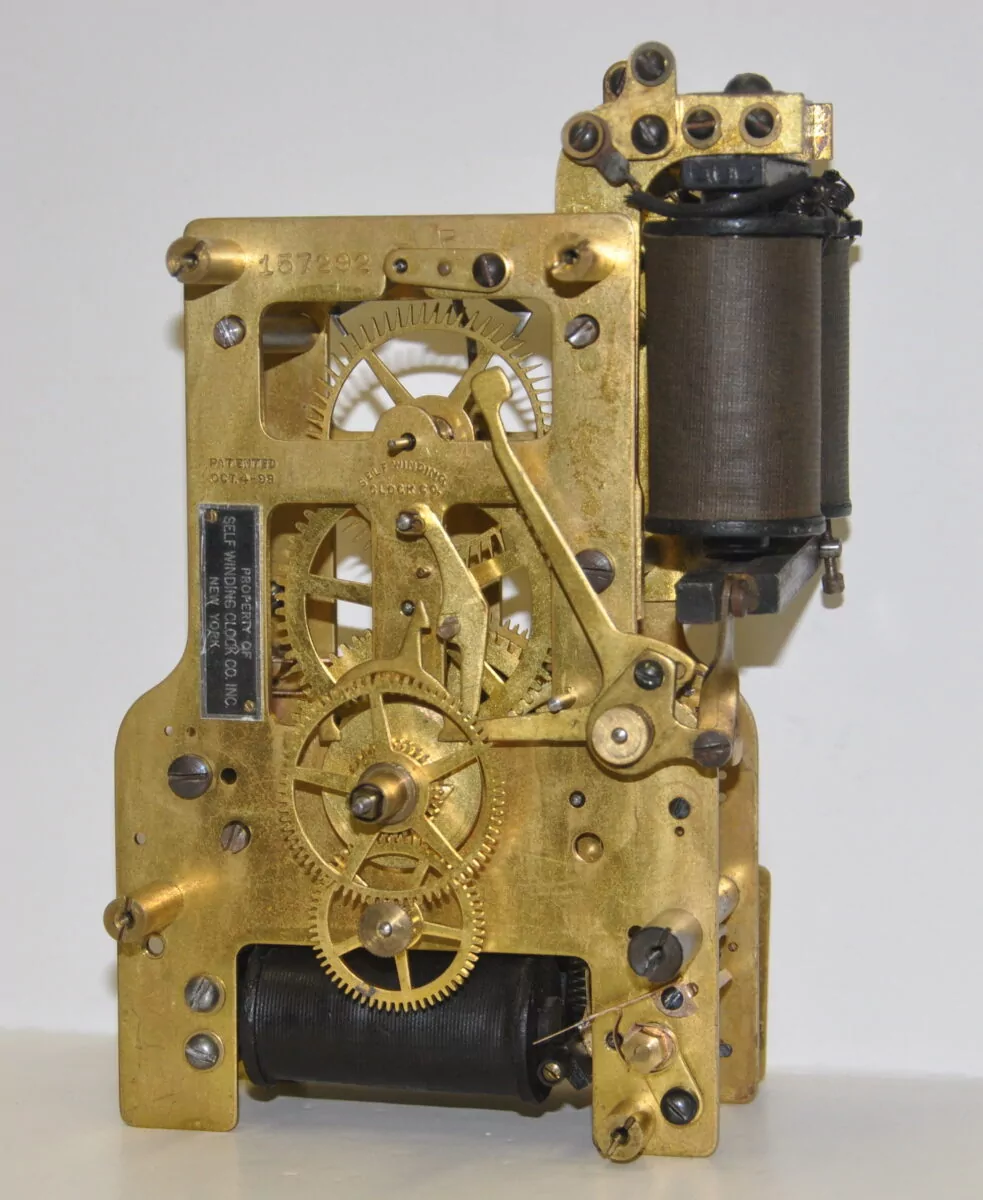
Photo credit: Elecclock
The movement of any antique clock obviously plays a significant role in its monetary value. Collectors strongly favor examples retaining their original, matching movement, as replacements or mismatched components can diminish value considerably, especially in 18th century tallcase clocks. Condition is equally important: worn pivots, fatigued springs, missing parts, or crude historic repairs, for example, all reduce desirability, while a clean, properly serviced movement enhances it. Restoration costs can be costly, sometimes prohibitive, with all movements requiring work by trained specialists, which is why, when determining a value, this needs to be factored in.
Dials
Many of the early American tallcase clocks of the mid to late 18th century feature imported brass dials, as only a handful of colonial makers possessed the tools to manufacture them locally. These dials followed British stylistic conventions of composite dials with raised silvered chapter rings and cast gilt spandrels. These dial assemblies where often just simply signed by American makers. As the century progressed, a small number of American artisans began producing painted iron dials, though these remained comparatively rare before 1800.
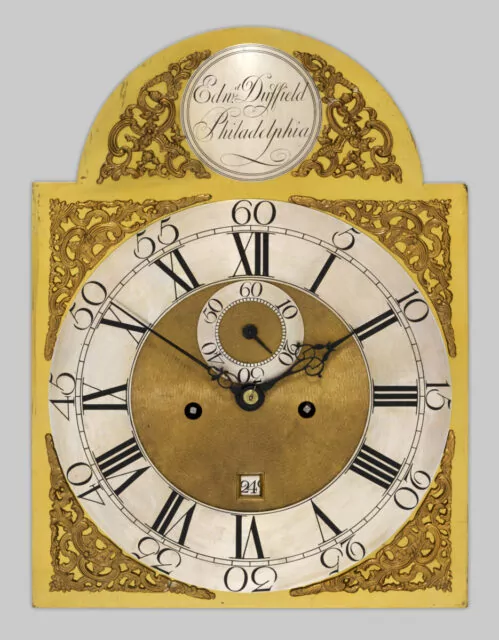
Photo credit: The Metropolitan Museum of Art.
By early 19th century, American makers, particularly in Connecticut, shifted decisively toward painted wooden or iron dials, encouraged by the need for cost effective mass production. Distinctive features are flat, circular or slightly convex wooden dials painted in white or cream, hand-painted Arabic or Roman numerals, and floral or patriotic motifs in the corners and arch.
As factory production became more sophisticated, dial design and construction diversified. Typical late 19th century examples include, transfer printed zinc dials, as well as printed paper dials applied onto metal plates, which were common on budget models.
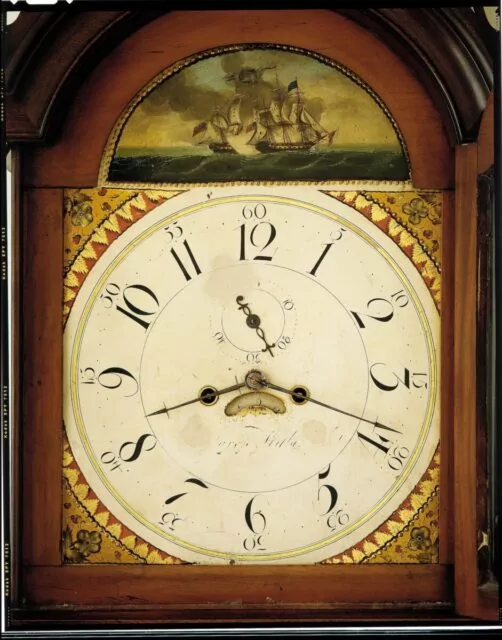
Photo credit: The Metropolitan Museum of Art.
Dials are invaluable in identifying the manufacturing period, factory, and intended market level of an American clock. Wear patterns, fading, repaints, spurious signatures and replaced dials are common issues in collectors’ pieces, and must be approached cautiously in valuation and attribution.
Case Styles, Shapes, and Materials
Case design evolved alongside movement technology. Tallcase clocks drew heavily from English designs, often featuring elegant proportions and high quality local woods. Shelf and mantel clocks, such as ogee, rounded top, and columned steeple models, became increasingly popular in middle-class homes. Victorian era gingerbread or kitchen clocks were known for their pressed wood decoration and reverse painted glass panels, while banjo clocks and wall regulators maintained a slim, refined silhouette with painted glass decorations.
As the 19th century progressed, decorative porcelain and cast iron mantel clocks gained popularity, often featuring elaborate ornamentation. Crystal regulators, with brass and glass cases, allowed the pendulum to be seen in motion. American clockmakers used a variety of materials, including mahogany, cherry, oak, walnut, pine, stained fruitwoods, as well as cast iron, porcelain, gilded metal, reverse painted glass, and even papier-mâché for decorative elements.
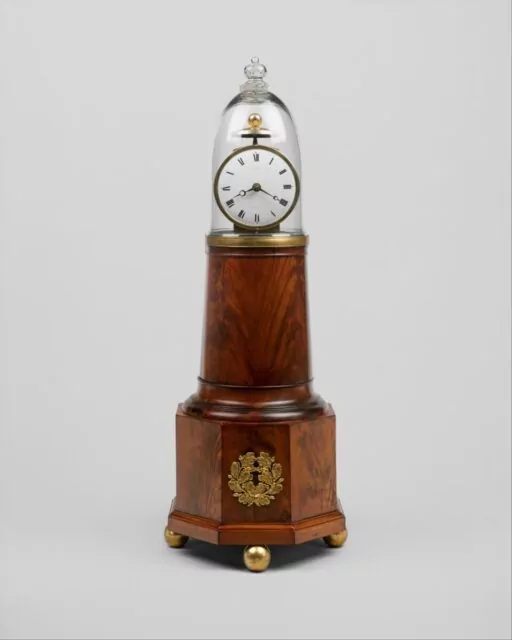
Photo credit: The Metropolitan Museum of Art.
Trying to Identify an Antique American Clock?
Whether you have an early wooden-movement shelf clock, a classic ogee wall clock, or a mass-produced piece from Seth Thomas or Ansonia, our specialists can determine its origin, date, and market value. Get a certified online appraisal within 24/48 hours.
Identify & Value My Clock
19th and Early 20th Century Factory Makers
The industrialization of clockmaking brought a new era of factory production, particularly in Connecticut. The Seth Thomas Clock Company became renowned for its robust mantel clocks, shelf clocks, regulators, and even tower clocks. Seth Thomas (1785-1859) himself apprenticed under Eli Terry, and started out making both tall clocks and mantle clocks with wooden gears before switching to brass movements in 1842. The Ansonia Clock Company, founded in 1851 by Eli Terry’s nephew Theodore Terry and Franklin C. Andrews, produced hundreds of different designs of clocks. They were a mass-production success, making their movements from stamped brass, and exported their affordable clocks worldwide. In contrast to these high volume manufacturers E. Howard & Co. of Boston specialized in good quality regulators and tower clocks, prized for their weight-driven precision.
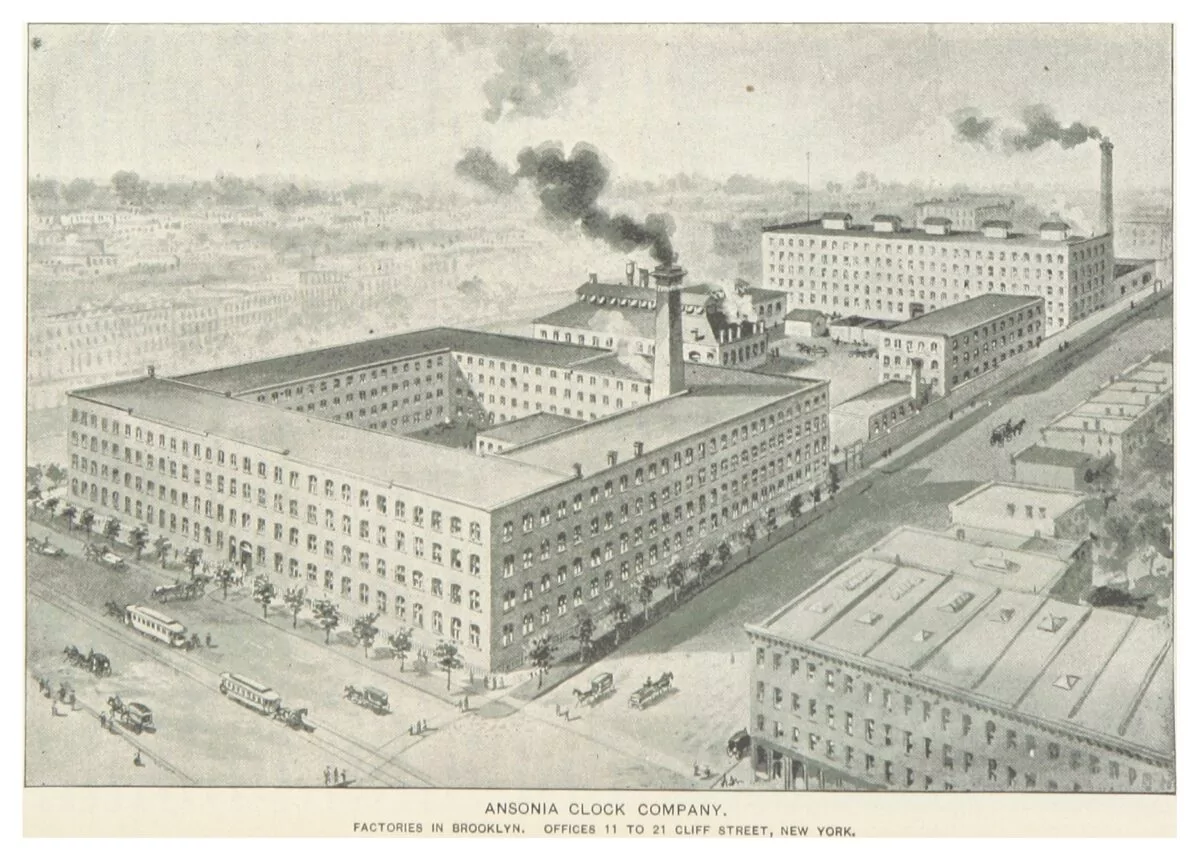
Other notable Connecticut factories, including the Waterbury Clock Company (later Timex), E. Ingraham & Co., Sessions Clock Company, New Haven Clock Company, and the Gilbert Clock Company, produced a huge array of mass market clocks. These makers often used paper labels and decorative tablets to identify their work, making it easier for collectors to trace provenance.
Manufacturing Processes
The early handmade clocks gradually gave way to mechanized production and interchangeable parts, a shift pioneered by Eli Terry, and adopted by the many industrial East Coast clock companies. Brass movements became standard as stamping and machining improved, and factories integrated case making, movement production, and finishing under one roof. Decorative enhancements, such as gilding, cast iron fronts, and reverse-painted glass, allowed for visually appealing yet affordable clocks, making them accessible to a broader audience.
I mentioned in another article on clocks, Antique English Clocks, each clockmaking country has stood out one way or another with their significant contribution to horology, so do Americans with theirs, and that was their manufacturing processes. While the early colonial clockmakers show for their exquisite and technically capable work, it is really the pioneering methods of mass production that took American clocks to new heights, and ultimately the country to the industrial economic powerhouse that it became.
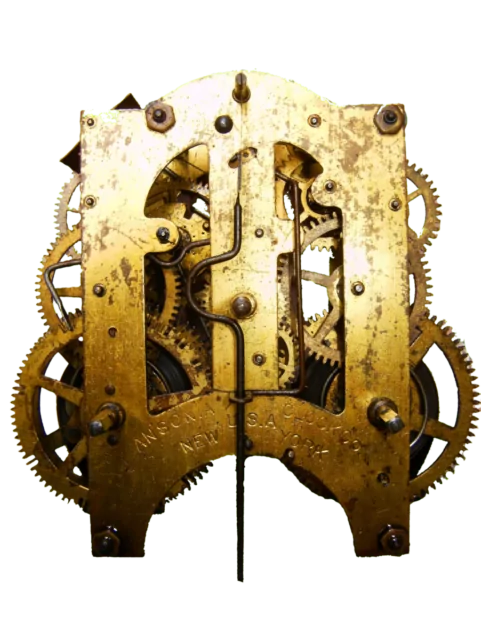
Photo credit: Ivan2010.
Care and Conservation
Maintaining antique clocks requires specilized attention and care. Original movements, dials, labels, and cases significantly influence value. Professional servicing, including disassembly, cleaning, bushing replacement, and oiling, is recommended every five to ten years. Clocks should be kept in stable climates, away from direct sunlight and rapid temperature or humidity changes. Preservation of original finishes and decals is generally preferred over restoration, and pendulums or weights should always be removed during transport to prevent damage.
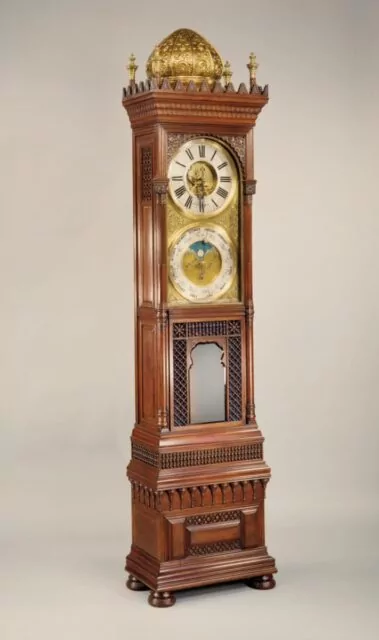
Photo credit: The Metropolitan Museum of Art.
Market Overview (2024-2025)
High end regulators, tallcase clocks, and signed early examples remain in strong demand. Victorian era mass produced pieces are more plentiful, and condition plays a critical role in value. Changing tastes and fashions across the antique world have seen broader appeal wane amongst these later pieces. They do, however, continue to have a base of enthusiastic collectors. Availability of parts and specialized expertise can also affect market prices, with collectors favoring untouched or minimally restored pieces.
Antique American clocks began with a combination of European born and American makers, such as the Curtis family, the Willards, David Wood, and Eli Terry, alongside actual immigrants like Thomas Harland. Their craftsmanship laid the foundation for the industrial revolution in American horology, leading to the factory produced clocks of the 19th and early 20th centuries. Understanding the historical evolution of makers, movements, and case styles, along with careful attention to condition and provenance, is crucial for collectors and enthusiasts seeking to appreciate and preserve these remarkable timepieces.
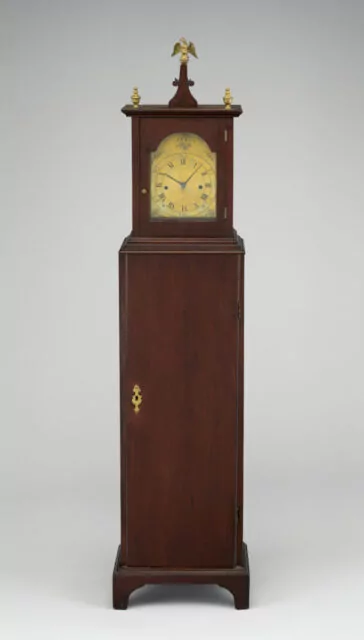
Photo credit: The Metropolitan Museum of Art.
Here at iValuations you’ll find experts in over 50 categories of art, antiques and collectibles, including clocks and watches, that are waiting to give impartial professional, affordable and in-depth valuation reports in a timeous and easy to use manner.
Recommended Resources
Technical Authentication: How We Inspect Movements and Calibres Online
Protecting Your Collection: How Often Should You Reappraise Your Clocks?
Insurance Security: Ensuring Your Clock Valuation is Insurance Ready
Market Value: Understanding Selling Value vs. Retail Replacement
Provenance: How a Clock’s History Can Impact its Final Appraisal
Ready to Value Your American Clock?
To get the most accurate valuation, please try to include photos of:
- ✓ The Full Case: A complete front shot showing the woodwork and condition of any lower glass door panel, particularly if it features original reverse-glass painting or stenciling.
- ✓ The Dial & Hands: Close-ups of the dial to evaluate the surface condition (especially on zinc or wood dials) and check if the hands match the period style.
- ✓ The Internal Manufacturer Label: Open the door and snap a clear photo of any printed paper manufacturer’s label pasted on the backboard interior.
- ✓ Movement: A clear shot of the movement (if available) to check for any stamped patent dates, maker names, or historical alterations.
100% Secure Checkout. All appraisals are conducted by independent, certified specialists.
