
Will Insurance Companies Accept Online Art & Antiques Valuations?

For much of the 20th and early 21st centuries, insurance valuations done for fine art, antiques, and collectibles were accomplished a certain way only. In-person, and by a recognised valuer producing a signed appraisal report detailing a specific item or items.
Insurance companies, legal bodies, financial institutions, and courts traditionally operate within a distinctly conservative framework. They deal with risk, liability, and financial exposure. They want as much certainty as possible. They want provenance, authority, accountability and a paper trail that can stand up in a court of law or during a claim.
The world is fast changing, however. The recent pandemic dramatically accelerated the shift to remote expertise across almost every industry, including valuations. Online art and collectibles auctions are now routine. Digital platforms have been embraced by major auction houses for some time now. Most financial institutions use digital onboarding as a standard. Yet the regulatory frameworks of insurance companies in many countries are still playing catch-up to this rapidly changing landscape.
In reality, the laws and regulations that govern our institutions are actually not the ones who are so slow to change, but rather our technology infused world is moving ahead at such a pace that it is difficult for them to adapt quickly and effectively.
The question is no longer whether online valuations exist. They do, and they can be done to a very high standard. The real question is, will insurance companies accept online valuations?
The answer is increasingly, yes! However, only if they’re done properly.

Why Insurance Companies Have Been Slow to Adapt
Insurers are, by design, naturally conservative. Their entire business model revolves around predictable risk and compliance with regulation. For decades, the only accepted way to value an artwork, antique clock, watch, or collection was through a physical, signed appraisal.
There are several good reasons for this caution. The first is concerns with authenticity. Insurers want assurance that the item exists, is genuine, and matches the given description. Physical inspection was just the simplest and easiest way to guarantee this.
Then another one of the most strongly considered reason is liability. If an insurer accepts an online valuation and then later discovers the item was misdescribed or counterfeit, they may have limited recourse. Requiring in-person reports shifts more responsibility to the valuer and the owner of the item.
In addition, not all online valuations are equal. Some are little more than automated estimates, an AI thumbsuck with no understanding of nuance, or brief opinions with no given methodology. Insurers understandably hesitate to rely on such reports as they would never stand up to critical examination.
Then there is regulatory and legal lag. In many jurisdictions, insurance laws and guidelines were written before online valuations were commonplace. They often require “written appraisals by a qualified valuer” but do not specify whether the inspection must be in person.
Lastly, there are legacy systems. Many insurers still use internal workflows and claims systems designed decades ago that are no longer efficient for todays world. Updating those processes takes time.
This doesn’t mean they won’t accept online valuations, only that they require clarity, structure, and confidence in the report.
Photo credit: The Metropolitan Museum of Art.
Legal and Institutional Conservatism, and Why It’s Shifting
Insurers, courts, and financial institutions are slow to change, but change is happening! Most modern legal systems now treat digital evidence as the functional equivalent of paper evidence, the only question that remains is determining how it must be handled.
Many major insurers now have digital claims and document portals, making in-person appraisals less practical. Post-pandemic, they are becoming increasingly open to using online valuations as long as they meet the requirements discussed above.
Regulatory language will likely catch up over the coming decade, but in practice, insurers are already accepting online valuations, provided they meet professional standards.
Photo credit: The Metropolitan Museum of Art.
Online Valuations vs In-Person Valuations: What’s the Difference?
It’s important to distinguish between the medium (online vs in-person) and the standard of work. A well prepared online valuation can, in many cases, offer the same quality of information as a traditional inspection.
| Aspect | In-Person Valuation | Online Valuation |
| Inspection | Physical handling and close examination of object | Based on high-resolution photographs and detailed client descriptions |
| Condition Assessment | Direct visual and tactile assessment | Visual assessment via images and supporting documentation |
| Authentication | Physical inspection of marks, materials, construction | Relies on clear photographs and often supporting provenance |
| Market Analysis | Same sources – auction records, retail prices, market data | Same sources – online access actually speeds up access to comparables |
| Delivery Speed | May require scheduling and travel | Typically much faster and often more cost-effective |
| Regulatory Acceptance | Long-established, often explicitly referenced in policy | Increasingly accepted when clearly documented and professionally prepared |

Photo credit: The Metropolitan Museum of Art.
How Insurance Companies Decide Whether to Accept a Valuation
The acceptance of an online valuation often comes down to internal underwriting guidelines, not the law. Typically, insurers look for a set of pre-requirements.
Firstly, a qualified valuer must be engaged. This is an obvious one but a report from a professional with relevant expertise carries much more weight than a generic “online estimate.”
Methodology must be transparent with a clear explanation of how the valuation was reached, including sources of market data. That, together with the valuers institutional knowledge, helps close any gaps or or possible unknowns.
Furthermore a declaration of limitations and disclaimers with clear statements regrading scope (e.g., based on photographs only) demonstrate professionalism.
To avoid any later confusion, a valuation must include a good, clear image of the item along with a descriptive, making note of any marks, labels, condition, dimensions and any other distinguishing details.
This is why online platforms that provide serious, well-structured reports, not just quick “what it’s worth” numbers are increasingly accepted by underwriters and claims departments.
Photo credit: Peter Wilson, licensed under the Creative Commons Attribution-Share Alike 4.0 International license.
Need an Official Valuation for Your Insurance Policy?
Our appraisals are conducted by independent, certified specialists adhering to strict industry standards. Protect your collection with an authoritative, underwriter-ready valuation report.
Request an Insurance Valuation
How iValuations Helps Bridge This Gap
At iValuations, our entire model is built to meet insurers where they are, combining the speed and accessibility of online valuations with the structure and credibility insurers expect from formal appraisals.
Here’s how we make our valuations insurance-ready:
- Professional Methodology & Scope -Every valuation includes a clear methodology & scope section outlining how values were reached, the sources consulted, and the basis of value (fair market and insurance replacement value).
- Detailed Notes & Object Descriptions -Reports include in depth descriptions, context, and background information on the object, often more thorough than a traditional short form appraisal.
- Photographic Evidence -Clients provide detailed, high-resolution images of their items, which are reviewed thoroughly to document distinguishing features, marks, signatures, and signs of condition.
- Insurer Friendly Language -Our reports are written in a structured format that underwriters understand, with clear valuation bases, and disclaimers, and documentation of any assumptions if given.
- Customisable Reports -We encourage our clients to first check with their insurerto find out exactly what kind of valuation documentation format is required. If a client’s insurer requires specific wording, formats, or extra documentation, we can adapt the valuation accordingly, provided the requirements are discussed beforehand.
- Multiple Currency Options -For clients insuring internationally, valuations can include USD, GBP, EUR, CAD, AUD, NZD and ZAR.
Photo credit: The Cleveland Museum of Art.
Fair Market Value vs Insurance Replacement Value
A key part of making a valuation insurance ready is understanding the basis of value.
- Fair Market Value (FMV): The price an informed, willing buyer would pay a willing seller in an open market. Typically falls between auction hammer prices and retail prices.
- Insurance Replacement Value (IV): The cost to replace the item immediately in a retail or gallery setting. Usually higher than FMV, as it reflects urgency and availability.
Many online valuations fail to make this distinction clear. iValuations, as a standard, provides both of these values in our reports as it gives one a better insight into the true market value of an item. However, in the case of providing an insurance appraisal, the FMV is usually not relevant and can be left out.
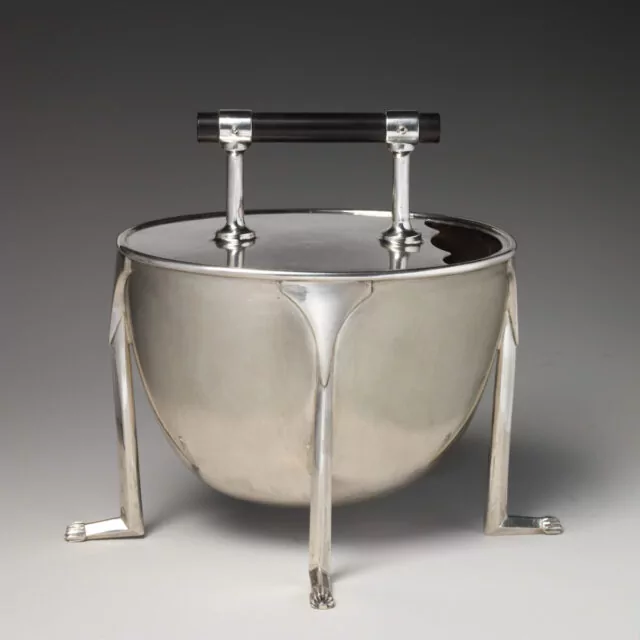
Photo credit: The Metropolitan Museum of Art.
The Advantages of Online Valuations for Insurers and Clients
While conservative institutions may resist change, online valuations offer undeniable advantages such as speed as there is no need to wait weeks to schedule an appointment for a viewing by the valuer.
With no travel and time required for physical inspection the valuation becomes much more cost effective, as well as giving one access to leading specialists anywhere in the world.
Digital documentation is much easier to store, share with insurers, and update.
iValuations uses valuers that have decades of experience in physically handling the objects that we now value online, as well as from perusing countless photographs in auction catalogues and websites. This has given us exceptionally critical eyes capable of easily, and quickly, deducing the sum of an item from no more than an image.
As more insurers recognise these benefits, acceptance rates will continue to grow. Online valuations are not a future concept, they are already here and established.
What’s changing is the institutional acceptance. Laws and policies are catching up with the reality that expert valuations can be done to a high standard remotely, with full documentation, clarity, and accountability.
For insurers, this means faster, cheaper, and more flexible risk management. For collectors and clients, it means cost effective accessible expertise, and less bureaucracy, and for professional valuers, it’s an opportunity to deliver modern, insurer ready reporting that fits into the digital economy.

Photo credit: The Cleveland Museum of Art.
How iValuations Can Help
In summary, we specialise in insurer and legal friendly valuation reports across the fine art, antiques and collectibles markets. We offer customised reports tailored to insurer requirements.
We then ensure each valuation contains the methodology, valuation basis, disclaimers, and documentation needed for insurer acceptance.
This helps clients avoid rejection or delays by advising them on how to align requirements with their insurance provider from the outset.
Whether you need a single item valued or an entire collection for insurance, estate, probate or selling purposes, iValuations can deliver professional, digital, and defensible valuations designed for today’s market.

Photo credit: The Metropolitan Museum of Art.
Here at iValuations you’ll find experts in over 50 categories of art, antiques and collectibles that are waiting to give impartial professional, affordable and in-depth valuation reports in a timeous and easy to use manner.
Recommended Resources
Understanding Our Process: How an Online Valuation is Done: A Step-by-Step Guide
The Professional Edge: Why You Should Pay for a Professional Art, Antiques, or Collectables Valuation
Defining Value: What is Your Collectable Worth? Understanding Fair Market vs. Insurance Value
Expert Oversight: The iValuations Guide to Expert Valuation for Art and Antiques
Terminology & Standards: Valuation, Evaluation, or Appraisal—Which Service Do You Actually Need?
Ready to Document Your Assets Securely?
To ensure your final insurance report is completely indisputable, please try to compile:
- ✓ High-Resolution Evidence: Clear photos of the item’s front, back, and any signatures or hallmarks to definitively prove its condition and identity.
- ✓ Dimensions & Condition Statement: Accurate physical measurements and notes on any existing restoration, damage, or wear.
- ✓ Provenance & Prior Documentation: Scans of any receipts, labels, certificates, auction catalogs, or previous appraisals to help establish a clear timeline of ownership and origin.
100% Secure Checkout. All appraisals are conducted by independent, certified specialists.
